
Insights
GEO Guide
Principles, methods, and practical execution for Generative Engine Optimization (GEO): how AI selects citation sources, how GEO differs from SEO, why retesting every 30 days matters, and how brands can appear in answers from Doubao, DeepSeek, and ChatGPT.
 GEO Guide
How to Write GEO Titles That AI Search Engines Actually Cite
Frame your title as a clear question and answer it in the first sentence. The more precise your subject and context, the easier it is for AI to match.
Sep 8, 2026 · 10 min read
 GEO Guide
How to Vet GEO Topics in China: The Baidu Baike Benchmark
High search volume does not equal a viable GEO topic. Use Baidu Baike to identify informational gaps before creating generative search content in China.
Sep 7, 2026 · 9 min read
 GEO Guide
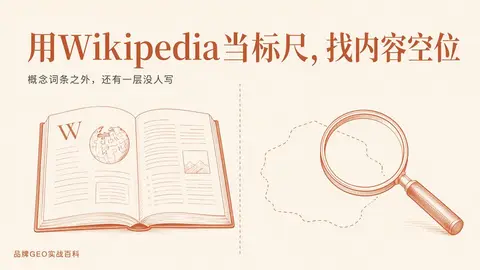
How to Use Wikipedia for Global GEO Content Ideation
A Wikipedia page defines what a concept is, but rarely tells buyers how to choose. Here is how to turn those content gaps into generative AI citations.
Sep 7, 2026 · 10 min read
 GEO Guide
How to Pick GEO Topics: Verify Demand, Then Find the Gaps
Prioritize GEO topics by verifying real user intent and finding gaps in existing encyclopedias before sorting by search volume.
Sep 6, 2026 · 9 min read
 GEO Guide
Does a Poor AI Answer Mean There Is a GEO Content Gap?
A bad AI response is a clue, not proof of a content gap. Learn how to validate real GEO opportunities using a five-step cross-testing process.
Sep 6, 2026 · 8 min read
 GEO Guide
How to Pick GEO Topics: Working Backward from User Prompts
Validate that buyers ask AI your question, confirm authority sources leave gaps, and ensure your team can provide verifiable, factual answers.
Sep 5, 2026 · 12 min read
 GEO Guide
Can Mass-Publishing Content Actually Shift AI Perception?
Publishing across dozens of accounts multiplies pages, not proof. AI models evaluate verifiable facts, not repeated claims from a single corporate source.
Sep 5, 2026 · 10 min read
 GEO Guide
How Domestic Brands Enter the Long-Term Memory of AI Models
GEO isn't just about real-time web retrieval. Learn how brands build verifiable, persistent authority across China's major AI ecosystems.
Sep 4, 2026 · 13 min read
 GEO Guide
GEO for Global Brands: 5 Paths to Building Public AI Corpus
AI citations depend on real-time web retrieval and verifiable public data. Here are five practical ways global brands build long-term AI training corpus.
Sep 4, 2026 · 10 min read
 GEO Guide
How Brands Can Seed AI Training Datasets for GEO
Live citations are fleeting, but training data endures. Here is how brands can structure public content to feed future AI training corpora.
Sep 3, 2026 · 10 min read
 GEO Guide
GEO Monitoring: What Metrics to Track and How Often
Track brand mentions, content citations, competitor share, and factual accuracy across AI engines on a weekly, monthly, and quarterly cadence.
Sep 3, 2026 · 11 min read
 GEO Guide
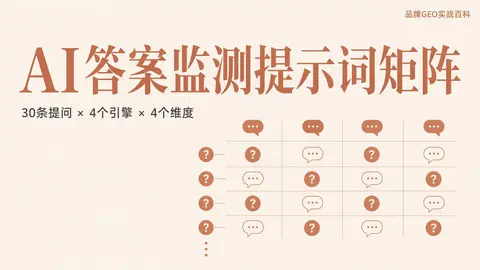
How to Track AI Search Visibility with a 30-Prompt Matrix
Single queries do not prove AI visibility. Build a 30-prompt matrix across four AI engines to track brand mentions, shortlist inclusions, and cited sources.
Sep 2, 2026 · 11 min read
 GEO Guide
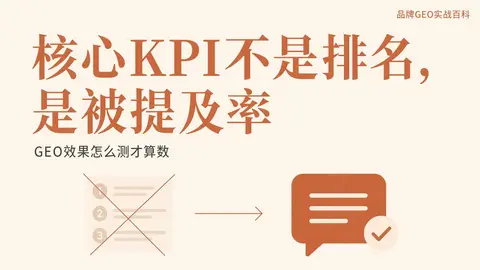
GEO KPI: Track Mention Rate, Not Search Rankings
Search rankings tell you where a page sits. Generative Engine Optimization requires a more direct KPI: your brand mention rate inside AI-generated answers.
Sep 2, 2026 · 12 min read
 GEO Guide
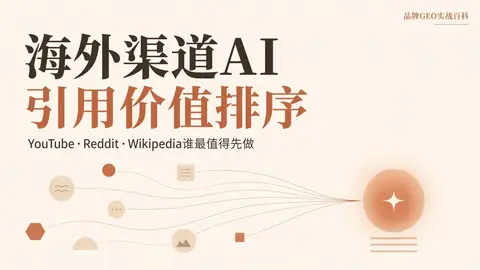
Which Global Channels to Build First? Ranking AI Citation Value
Start with faster channels like G2, Capterra, or LinkedIn (2-6 weeks) before investing in high-value, high-effort platforms like Reddit or Wikipedia.
Sep 1, 2026 · 8 min read
 GEO Guide
China GEO Channel Strategy: Zhihu, WeChat, Baidu, or Douyin?
Chinese AI engines pull from different closed platforms. To optimize citations across Yuanbao, Wenxin, Doubao, Kimi, and DeepSeek, tailor your channels accordingly.
Sep 1, 2026 · 9 min read
 GEO Guide
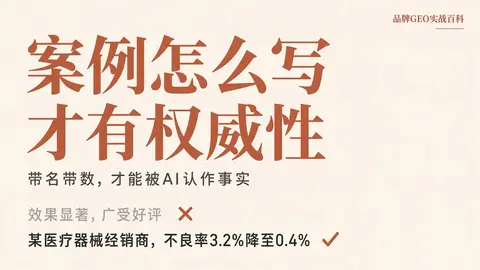
Writing Authoritative Case Studies: Names, Numbers, and Sources
To earn trust from buyers and citations from AI engines, case studies need verified names, metrics, and sources—not vague claims of 'remarkable results'.
Aug 31, 2026 · 9 min read
 GEO Guide
Why Focusing Only on Your Website Fails at Brand GEO
Optimizing your corporate website helps AI read your brand data, but 86% of citations come from third-party channels. Here is why website-only GEO falls short.
Aug 31, 2026 · 7 min read
 GEO Guide
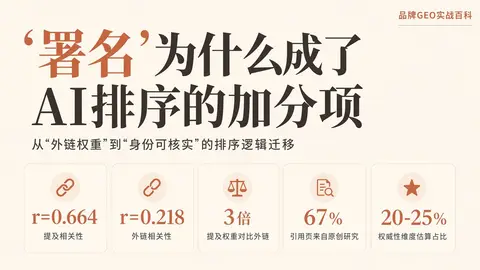
Why Author Bylines Influence How AI Engines Rank Content
When AI engines cite content, author identity matters as much as the text. Here is how verifiable bylines build authority in generative search.
Aug 30, 2026 · 7 min read
 GEO Guide
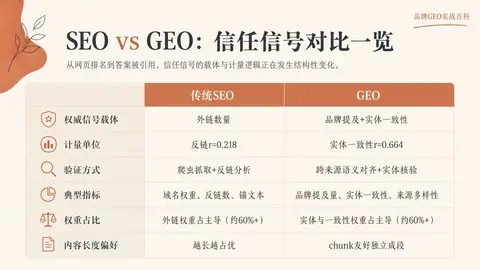
Building E-E-A-T Authority Signals in the GEO Era
Generative Engine Optimization shifts authority from backlinks alone to cross-platform entity consistency, verifiable facts, and multi-source consensus.
Aug 30, 2026 · 10 min read
 GEO Guide
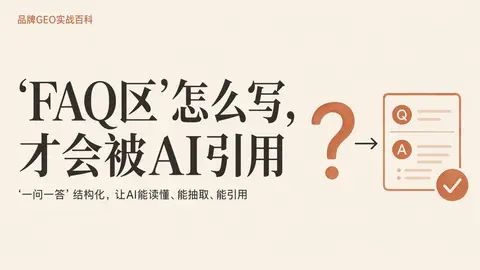
How to Write FAQ Sections That AI Engines Actually Cite
AI citation depends on whether each FAQ entry can stand alone to answer a real query. Here is how to format FAQs for Generative Engine Optimization.
Aug 29, 2026 · 8 min read
 GEO Guide
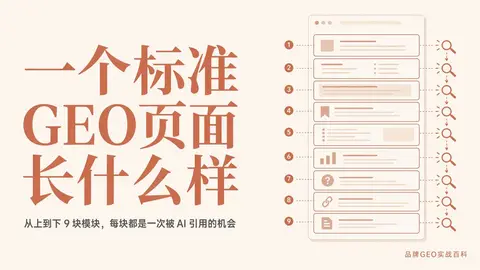
How to Build a Standard GEO Page: The 9-Module Framework
A standard GEO page uses nine distinct modules to help AI search engines parse, understand, and cite your content in answer generation.
Aug 29, 2026 · 9 min read
 GEO Guide
Why AI Engines Cite Tables, Lists, and FAQs More Often
Structured formats give AI engines clear semantic boundaries, making it easier to extract self-contained chunks for generative search citations.
Aug 28, 2026 · 10 min read
 GEO Guide
How to Verify If AI Engines Actually Know Your Brand
Auditing your brand's presence in AI search requires testing entity recognition, category prompts, and citation stability across multiple engines.
Aug 28, 2026 · 7 min read
 GEO Guide
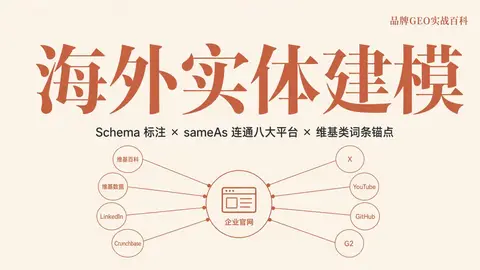
Global Entity Modeling: Schema and sameAs Across 8 Platforms
Generative engines rely on consistent entity signals. Here is how to model your brand using Schema.org, sameAs, and Wikidata across eight platforms.
Aug 27, 2026 · 11 min read
