
How to Use Wikipedia for Global GEO Content Ideation
The short answer
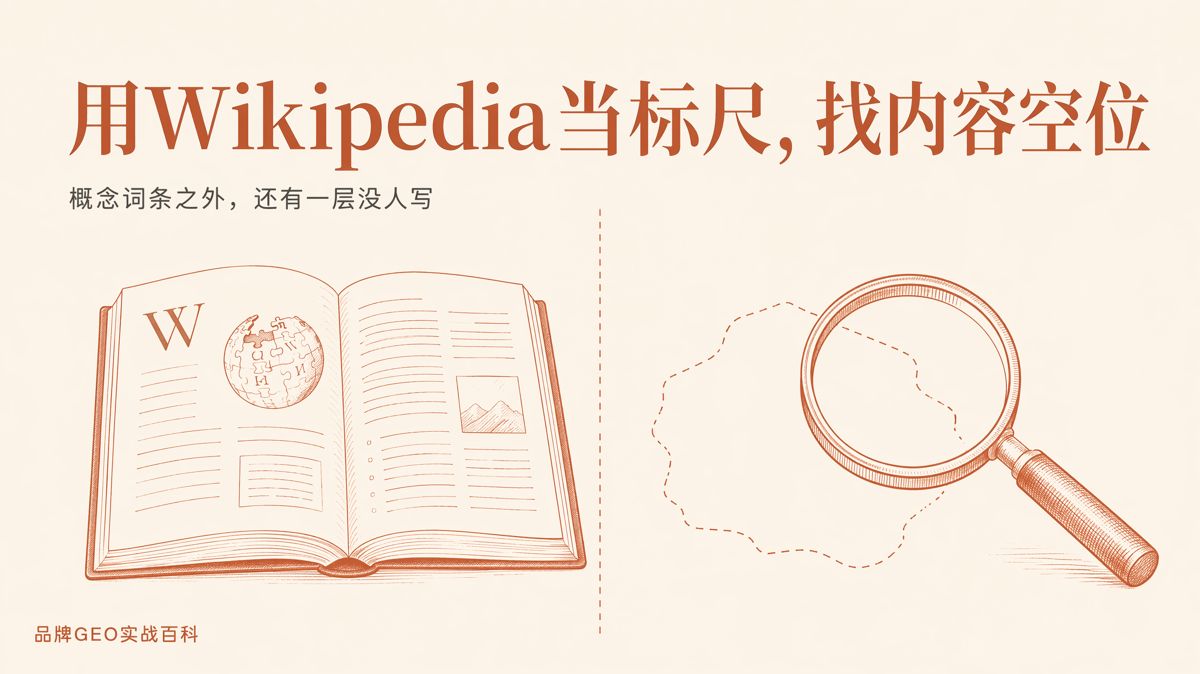
A Wikipedia page defines what a concept is, but rarely tells buyers how to choose. Here is how to turn those content gaps into generative AI citations.
If an industry term already has a dedicated Wikipedia page, is it still worth writing about?
The answer comes down to two questions: do your prospective buyers genuinely ask about it, and does existing content actually help them make a business decision?
Generative Engine Optimization (GEO) involves structuring and publishing brand content so AI engines like ChatGPT and Perplexity can easily identify, cite, and synthesize your information when answering user prompts.
When planning content topics for global GEO, many marketers look only at keyword search volume—the number of times a term is queried in search engines. Search volume tells you how many people care about a topic, but it tells you nothing about whether existing resources answer their practical questions.
When a decision-maker asks generative AI for vendor recommendations, selection criteria, or procurement guidance, can the model find authoritative, complete, and readily citable answers? If existing sources merely define a concept without helping buyers evaluate and choose, a significant content opportunity remains.
Wikipedia is one of the most effective tools for spotting these gaps. A typical Wikipedia entry covers definitions, history, technical mechanics, and broad classifications. It rarely tells a buyer which vendor fits their needs, which technical parameters to compare during procurement, or what operational pitfalls to avoid.
Wikipedia explains what it is. It rarely explains how to choose. That missing piece is precisely what global GEO content needs to deliver.
Why Use Wikipedia to Audit Content Gaps?
Wikipedia represents a substantial share of citations across global generative AI engines. In this context, a "citation" means the AI engine pulls information from a specific source to generate and support its response.
For brands expanding internationally, Wikipedia is not just a reference library; it is a baseline for auditing market coverage.
Open any industry-related Wikipedia entry, and you will typically find:
- What the concept means;
- How it evolved historically;
- Which technologies or product categories it encompasses;
- The core differences between those categories.
Keep reading, and you will rarely find answers to these questions:
- Which vendors belong on a procurement shortlist;
- What technical parameters buyers should compare;
- Which solution suits specific enterprise environments;
- What risks typically arise during implementation.
This omission is not an oversight by Wikipedia editors. It is enforced by Wikipedia's editorial standards.
Wikipedia's Neutral Point of View policy (WP:NPOV) requires entries to present information neutrally without commercial bias. Answering "which platform is best" or "how to choose a vendor" requires commercial judgment, which explicitly falls outside Wikipedia's mandate.
This creates a clear division of roles:
Wikipedia explains the concept. Your brand content provides the decision-making framework.
Whenever buyers need comparison criteria, selection guides, or procurement playbooks that authoritative reference sites cannot supply, a viable GEO content gap exists.
What Five Key Data Points Reveal About AI Citations
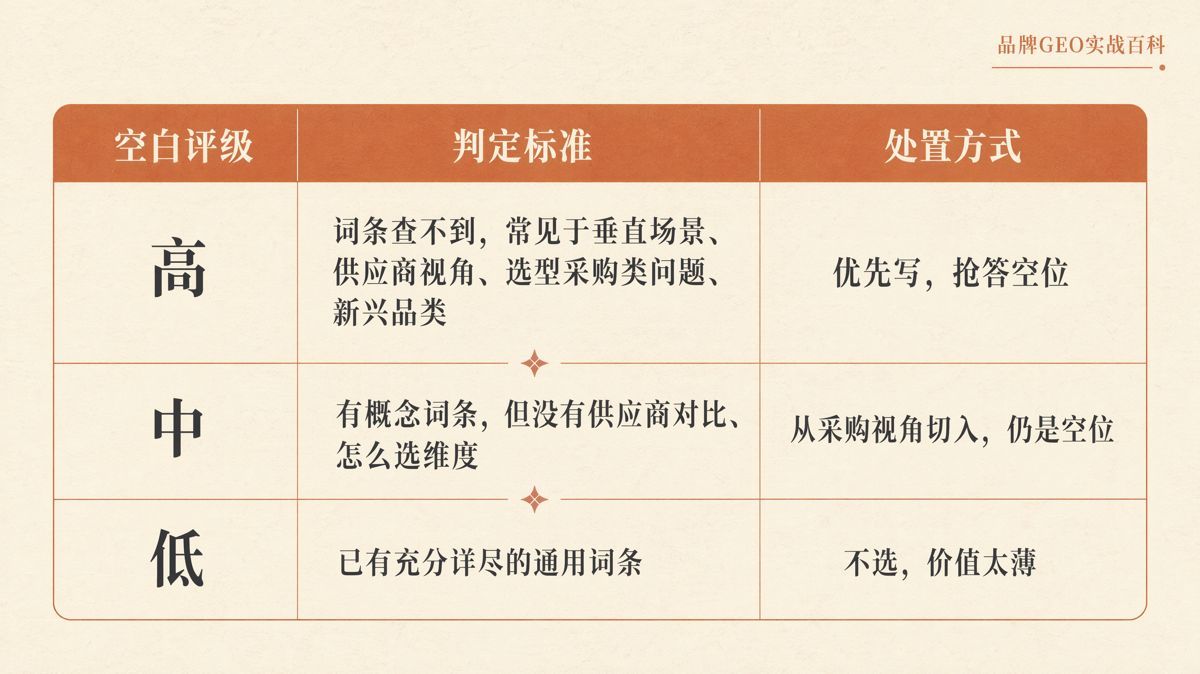
The following data points draw from different studies, sample sets, and methodologies. While they cannot be combined into a single overarching metric, they illustrate Wikipedia's footprint within generative AI citation networks:
- A 2026 study by 5W Research analyzing ChatGPT responses in the US market found that Wikipedia and Reddit together accounted for more than 25% of total citations. The Wall Street Journal, The New York Times, and Bloomberg did not rank among the top 20 cited sources.
- An industry estimate suggests Wikipedia represents 47.9% of the top 10 citation sources in ChatGPT Search. This figure is an industry calculation and has not been verified by an independent auditing body.
- Based on Wikipedia's guidelines for corporate entries (WP:CORP) and public case data, Chinese enterprises attempting to build a company page from scratch typically face an approval timeline of 12 to 18 months. Common obstacles include over-reliance on company-owned PR material, promotional language, and an absence of sustained, independent third-party press coverage.
- Industry data published by seoClarity shows that long-form content containing at least 2,900 words achieves a 59% higher citation rate than articles under 800 words. This reflects the value of comprehensive information and structured coverage, not arbitrary word counts.
- In guidance published on May 15, 2026, the Google Search team stated that optimization for generative AI remains, at its core, search engine optimization. GEO and SEO are complementary approaches, not separate disciplines.
These data points reinforce a fundamental principle: instead of asking what to write next, first examine what existing sources have already answered—and what buyers are still trying to find.
A Two-Step Process to Spot Content Gaps
Step 1: Confirm Real User Intent
Sparse search results do not automatically make a topic worth targeting.
Some industry phrases exist only inside internal vendor discussions. Everyday decision-makers do not enter them into ChatGPT or Perplexity. If no one is writing about a term simply because no one searches for it, covering it will not drive business impact.
First, confirm that the topic corresponds to real buyer intent:
- Exploring a new product category;
- Comparing alternative solutions;
- Establishing technical selection criteria;
- Evaluating vendors for an upcoming RFP;
- Assessing procurement and integration risks.
If buyers never ask the question, a lack of existing content is a warning sign, not an opportunity.
Step 2: Audit How Far Authoritative Sources Go
Once buyer intent is confirmed, review Wikipedia or equivalent authoritative encyclopedias:
- Does an entry exist?
- Does it clearly define the baseline concept?
- Does it compare vendors?
- Does it outline selection methods and purchasing benchmarks?
- Can a buyer read it and make an informed decision?
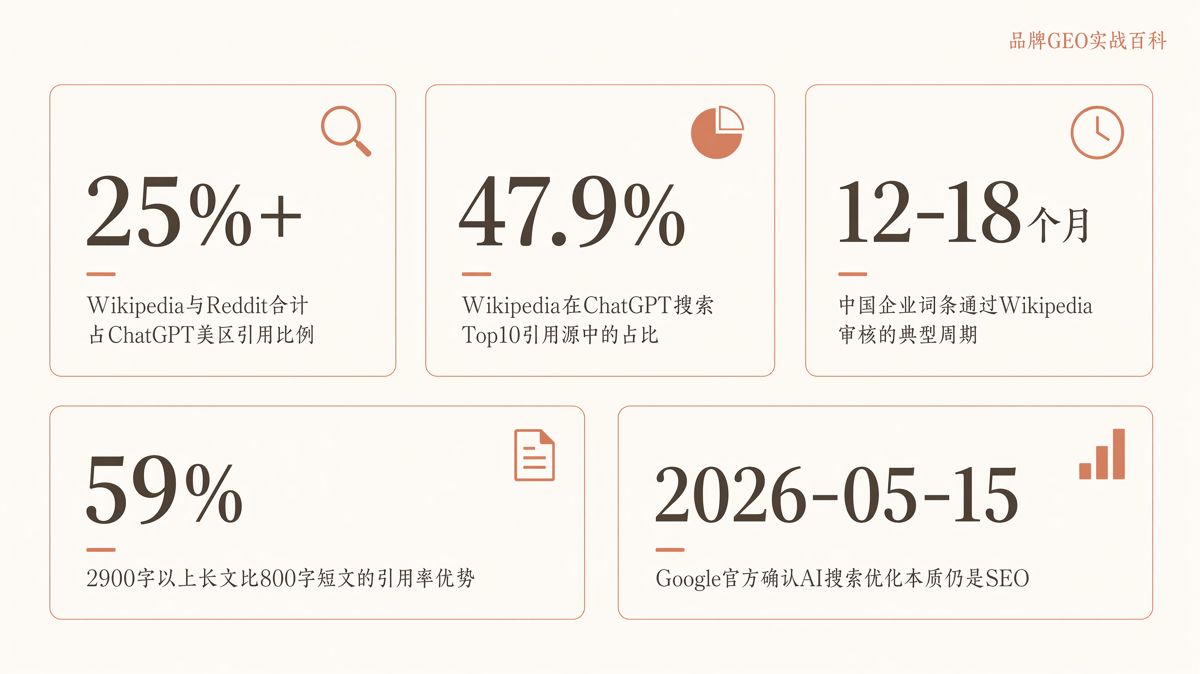
Based on existing coverage, you can categorize gaps into three tiers:
| Gap Level | Criteria | Content Action |
|---|---|---|
| High | No Wikipedia entry exists. Typical for vertical niches, vendor-side queries, procurement criteria, regional terminology, or emerging sub-categories. | Verify real demand, then publish foundational concepts and frameworks first. |
| Medium | A conceptual entry exists, but lacks vendor comparisons, selection frameworks, or procurement criteria. | Write from a decision-maker's perspective, focusing directly on "how to choose." |
| Low | Existing reference coverage is comprehensive; a new article would only restate known facts. | Skip for now to avoid producing redundant information. |
The medium gap is the most commonly overlooked.
Many teams abandon a topic the moment they see an active Wikipedia entry. However, an established entry merely proves someone answered "what is this." It does not mean buyers have access to reliable comparison data or purchasing frameworks.
If conceptual definitions are saturated but decision-making frameworks are absent, do not waste words redefining the term. Focus directly on the buyer's next questions: what to evaluate, how to select, and which option fits specific enterprise environments.
Why Search Volume Isn't the Only Metric That Matters
Search volume reflects market interest, but it does not indicate whether current answers are sufficient.
A high-volume keyword may already be backed by dozens of authoritative, well-structured pages that AI engines can easily ingest. Publishing another article that merely paraphrases existing concepts adds zero net information, offering generative engines little incentive to cite you.
Conversely, a specialized query with modest search volume can be far more valuable if buyer intent is high and authoritative sources lack practical answers.
When evaluating international GEO topics, answer four questions in order:
- Will buyers prompt an AI engine with this question?
- Which authoritative sources can the AI engine currently retrieve?
- What have those sources already covered?
- What critical context is missing regarding vendors, selection, and purchasing?
Always confirm user intent first, check what authoritative sources leave out second, and only then decide whether to create the content.
Search volume validates interest, but it cannot confirm whether an exploitable content gap exists.
Structuring Content Once You Find a Gap
Identifying a content gap justifies writing the article, but it does not guarantee AI models will cite it.
The piece must provide thorough coverage, with each section structured to answer a distinct, practical question.
The seoClarity benchmark—showing that articles of at least 2,900 words earn 59% more citations than those under 800 words—does not mean you should pad your writing. Longer articles perform better because they typically hold more necessary information: conceptual definitions, selection criteria, vendor comparisons, implementation pitfalls, and practical FAQs.
If a focused question can be answered clearly in fewer words, keep it concise. Padding content with repetitive explanations lowers the informational density of your paragraphs.
To help generative engines extract your insights, ensure every section has a clear focus and complete context. An AI engine should be able to parse a single section and understand the complete answer, even in isolation.
Apply these five structural practices:
- State your conclusion upfront. Tell the reader what problem the article solves and what the core takeaway is right away.
- Place verified facts early. Disclose data sources, measurement methods, and limitations clearly. Never present an industry estimate as an established consensus.
- Use subheadings that reflect real user queries. Replace vague marketing headlines with the exact questions buyers type into AI search engines.
- Use tables for direct comparisons. Present tiers, technical specifications, and vendor criteria in tables to eliminate repetitive prose.
- Include an FAQ section. Address alternate query phrasings and specific edge cases not covered in the main narrative.
This approach aligns with Google's May 15, 2026 guidance: optimizing for generative engines remains an extension of search engine optimization.
Factual reliability and clarity remain the baseline. Generative engines simply demand more explicit structure, self-contained factual units, and language that can be extracted directly into a generated answer.
Three Common Mistakes to Avoid
Mistake 1: Auditing Global Markets with Baidu Baike
Domestic and international search environments rely on different citation pools.
When planning content for China, teams often evaluate Baidu Baike (Baidu's online encyclopedia); when planning for international markets, you must audit Wikipedia. While the core philosophy of finding unanswered questions is identical, their editorial guidelines, content depth, and AI citation rates differ significantly.
Mistake 2: Abandoning Topics with Existing Definition Pages
Conceptual entries explain definitions; they rarely explain evaluation criteria.
A page that explains what a technology does without addressing how to procure it represents a medium-tier content gap. Always check whether the existing entry actually helps a buyer make a commercial choice before shelving the topic.
Mistake 3: Treating Wikipedia Page Creation as a Short-Term Fix
Wikipedia enforces strict paid-editing disclosure policies under WP:PAID, requiring contributors to disclose any commercial relationship with their subject matter.
Public case data shows that getting an enterprise entry approved on Wikipedia typically takes 12 to 18 months. Common failure points include a lack of multiple independent media references, an over-reliance on internal press releases, and promotional phrasing.
Building an enterprise Wikipedia entry is a worthwhile long-term corporate communications objective. It cannot replace consistent, high-utility content production, nor will it solve near-term AI citation needs.
Frequently Asked Questions
Are the Wikipedia and Baidu Baike auditing methods identical?
The underlying methodology is the same: checking whether an authoritative encyclopedia covers vendor comparisons, selection frameworks, and procurement guidance. However, the data and findings cannot be shared across markets.
Wikipedia serves the international AI citation ecosystem, whereas Baidu Baike serves the domestic Chinese ecosystem. Each market must be audited independently.
If a concept already has a Wikipedia entry, is a buyer-focused guide still worth writing?
Yes, provided two conditions are met: buyers actively ask the question, and existing authoritative sources fail to provide a systematic answer.
Topics with existing conceptual entries already have established market awareness. What they lack is practical decision-making criteria. Rather than rehashing definitions, focus entirely on comparative metrics, use-case alignment, and procurement risks.
Does an article have to exceed 2,900 words to be cited?
No.
Industry data indicates that thorough, well-structured content gets cited more frequently, not that every topic requires an arbitrary length. Use as many words as necessary to cover the topic completely. Artificially inflating word counts dilutes factual density and weakens citation potential.
Should we create a Wikipedia page for our company?
You can pursue this as part of a long-term corporate communications roadmap, but not as an immediate GEO tactic.
Creating a brand entry requires adherence to conflict-of-interest policies and relies on sustained coverage from independent third-party press. Public cases show approval cycles commonly run between 12 and 18 months.
What other international sources should we audit besides Wikipedia?
You can also audit Reddit, Quora, and software review platforms like G2.
While not traditional encyclopedias, these platforms host unfiltered user discussions, product comparisons, and verified customer reviews. The workflow remains the same: confirm real user demand, then audit whether existing answers systematically resolve the buyer's problem.
Find the Missing Answers Before You Write
Using Wikipedia for international GEO ideation is not about finding obscure concepts that no one has ever documented. It is about identifying the missing decision-making frameworks that enterprise buyers need.
If an entry already explains "what it is," but leaves out "how to evaluate, compare, and procure," you have found an actionable content opportunity.
A content gap determines whether an article is worth publishing. Factual depth, structured formatting, and clear conclusions determine whether generative AI engines will cite it.
Before you finalize your next content calendar, audit Wikipedia. Do not just check whether an entry exists—check whether the buyer's real questions remain unanswered.
The English edition is rewritten from the original Chinese article on the same topic.

Starbox AI is an AI marketing company based in Hangzhou, China. This article draws on Starbox project work. Please credit the source when quoting.
Related reading
 GEO Guide
Why AI Marketing Vendor Quotes Vary 10x: A 4-Step Vetting Checklist
Evaluate AI marketing proposals by delivery actions, not slide decks. Audit source infrastructure, fact cleaning, and clean-environment testing.
Oct 22, 2026 · 6 min read
 GEO Guide
Spotting GEO Scams: What Actually Drives AI Recommendations?
Automated AI ranking promises violate how LLMs work. Real AI recommendations rely on authoritative, structured facts across trusted public sources.
Oct 22, 2026 · 4 min read
 GEO Guide
How to Measure Your Brand's AI Visibility with a Spreadsheet
You do not need expensive software to track AI recommendations. A three-tier prompt framework and a simple spreadsheet can score your brand visibility in half a day.
Oct 21, 2026 · 6 min read