
Why the Same AI Workflow Yields Different Quality—and How to Fix It
The short answer
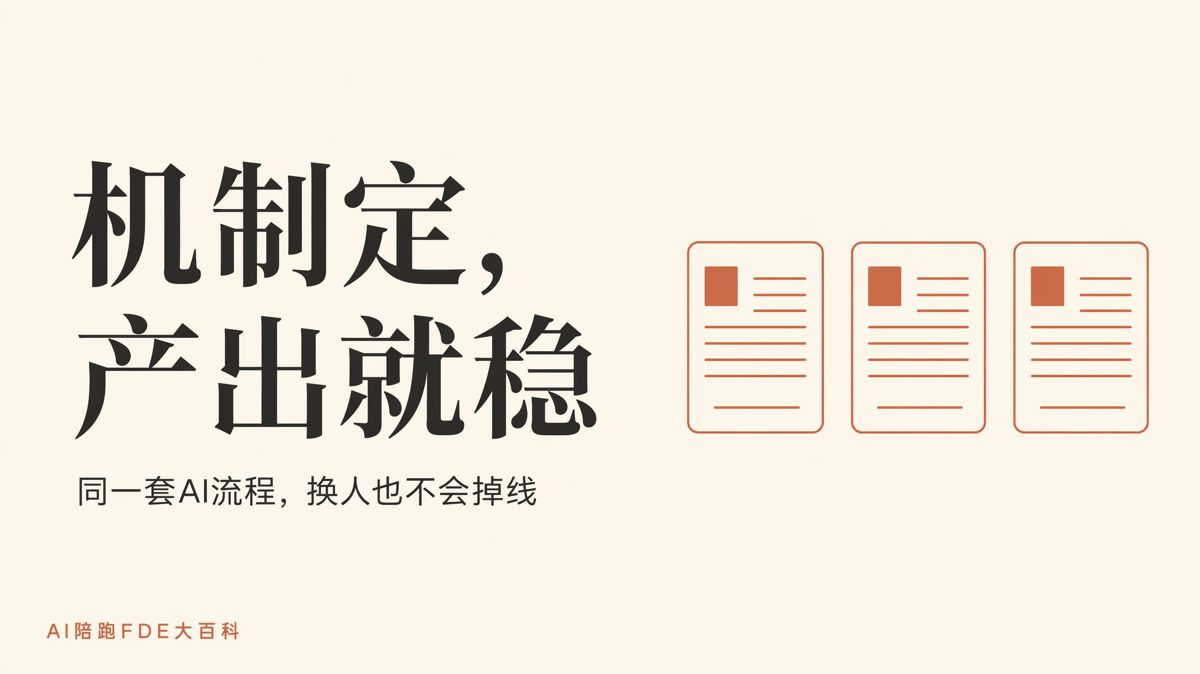
Consistent AI output does not depend on who types the prompt. It depends on institutionalizing knowledge, style rules, and quality gates into a fixed system.
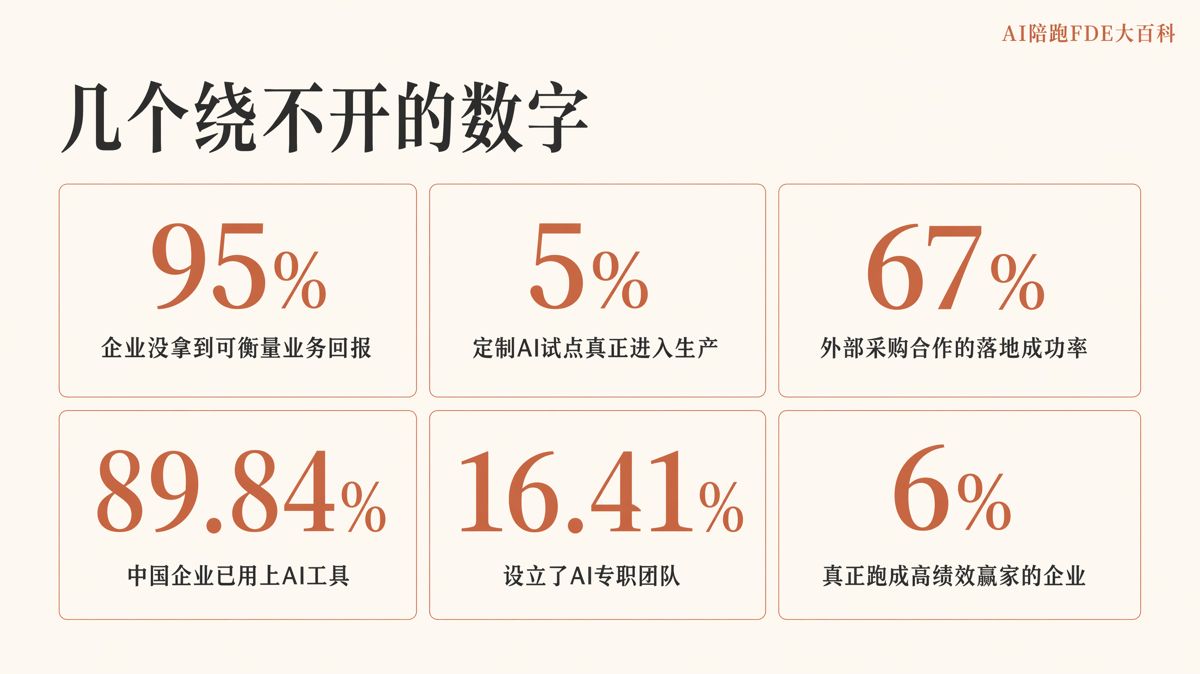
Key Industry Data: - McKinsey's 2025 State of AI Survey (Greater China) found that only 6% of enterprises qualify as "high-performing winners." Most remain trapped in the stage of "using AI without running it reliably." - The 2025 China Entrepreneurs Artificial Intelligence Application Survey Report showed that 89.84% of surveyed companies have adopted AI tools, but only 16.41% have established dedicated AI teams. Broad adoption does not equate to organizational production capability. - MIT Project NANDA's 2025 report The GenAI Divide (based on 150 executive interviews, 350 employee surveys, and 300 public deployment case studies) revealed that while over 80% of organizations have tested generative AI tools, 95% achieved zero measurable business return, and only 5% of custom pilot projects advanced to actual production. - The same report noted that organizations taking a "procurement plus external partnership" implementation path achieved a success rate of roughly 67%—about triple the success rate of teams attempting purely internal trial-and-error.
Why Two People Get Different Results from the Same AI Workflow
A workflow and an operating mechanism are not the same thing.
A workflow simply outlines what step comes first and what step comes next. A mechanism specifies what source material must be pulled at every step, what criteria determine if the output passes, and who stops the line when an error occurs.
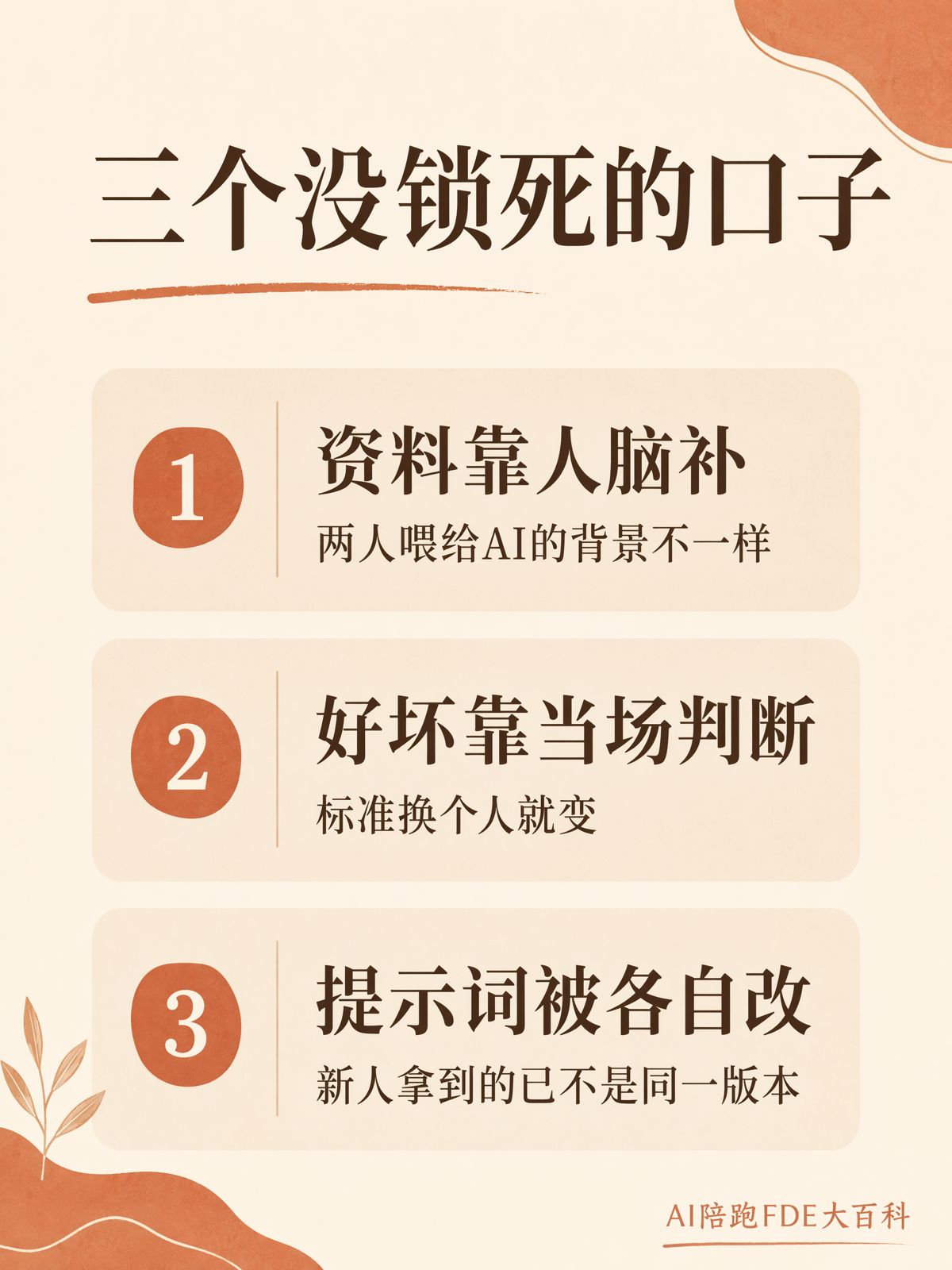
When an experienced operator uses an AI tool, they intuitively manage implicit variables: which source materials to feed in, which technical nuances to polish, and how to course-correct if the model veers off-track. Give a beginner the exact same tool and prompt, and their output falters because they lack those unspoken judgment calls.
MIT NANDA's 2025 findings attribute this variance to organizational and process friction rather than model limitations. This explains the widespread "high adoption, low conversion" pattern: anyone can click an interface, but stable, predictable delivery requires a robust mechanism behind the tool.
Is "Knowing How to Use AI" the Same as "Predictable AI Output"?
No. The former is an individual technical skill; the latter is an organizational capability.
Closing the gap between them requires three assets: an enterprise knowledge base, standardized evaluation criteria, and actionable quality checklists.
General-purpose large language models reset with every new chat session. They have no memory of your company's operational rules. Without external guardrails, output quality depends entirely on the operator's real-time experience. An industry veteran and an entry-level employee prompting the same model will produce starkly different work.
An enterprise knowledge base powered by Retrieval-Augmented Generation (RAG) writes your institutional decision-making rules directly into the reference repository. Every time the model executes a task, it pulls from identical standards rather than relying on an individual operator's memory.
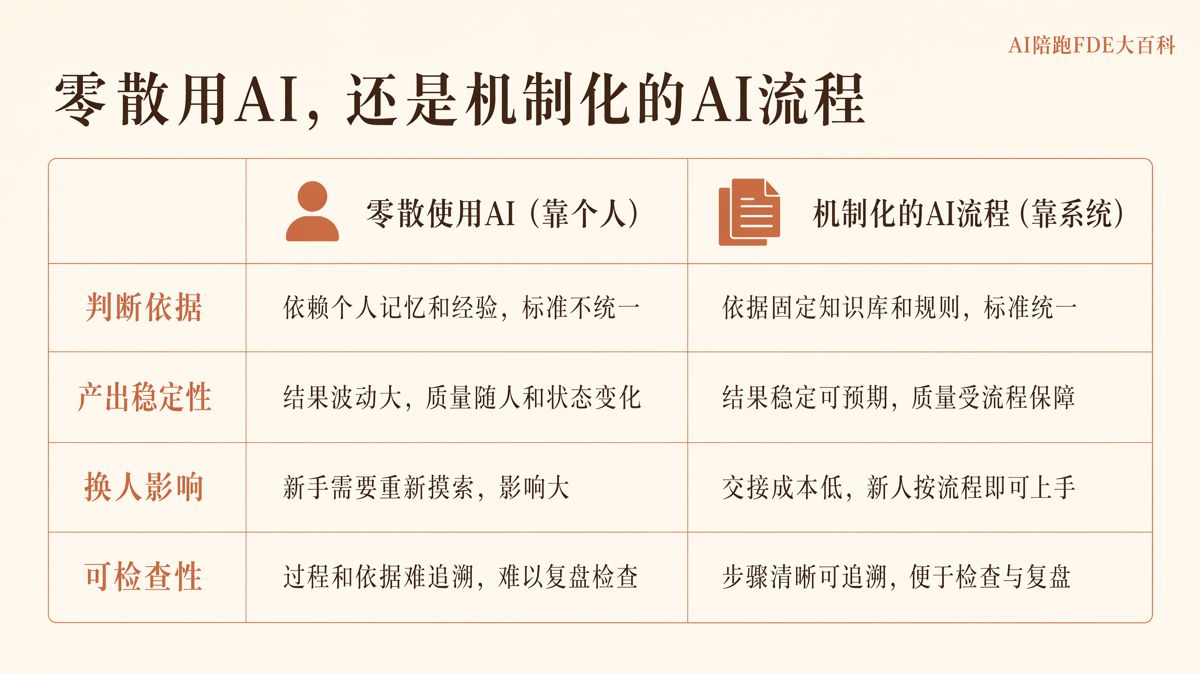
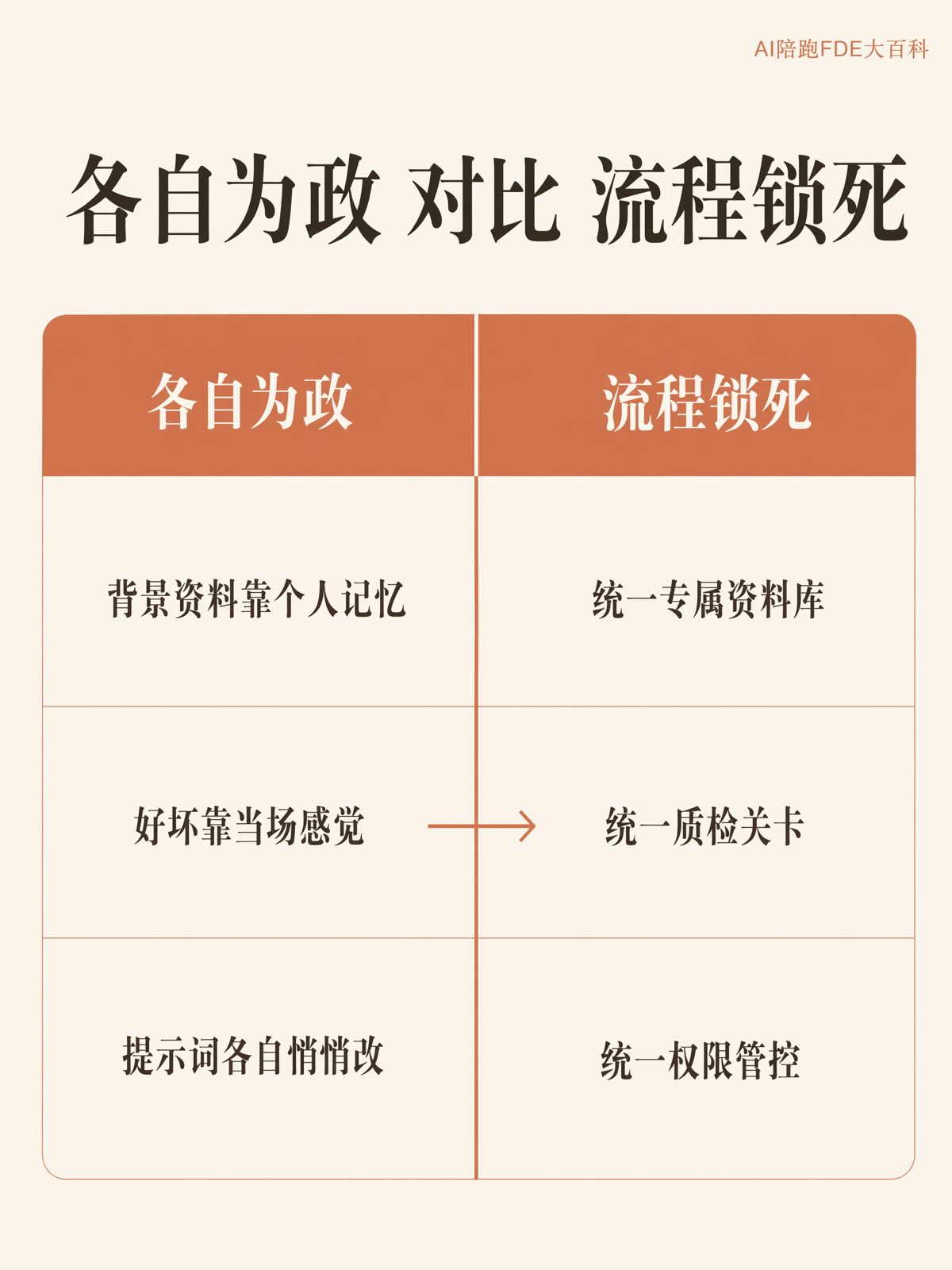
| Evaluation Dimension | Ad-Hoc AI Usage (Individual-Led) | Mechanized AI Process (System-Led) |
|---|---|---|
| Basis of Judgment | Personal experience and operator memory | Fixed knowledge repositories and explicit standards |
| Output Stability | Highly variable; beginners underperform | Governed by predefined standards; minimal variance |
| Personnel Turnover | Changing staff alters output quality | Standards remain constant; output holds steady |
| Reviewability | Judged subjectively by "feel" | Audited against an objective, itemized checklist |
Can Better Prompts Fix Inconsistent Output?
No. Tweaking prompts merely adjusts how you ask a question. It does not resolve how your team verifies whether the answer meets business requirements.
In content operations, generic copy and erratic quality are frequently blamed on poor prompt engineering. Teams spend hours rephrasing text and adding descriptive adjectives, but the underlying deliverables rarely improve. The baseline quality of any AI output depends on whether it draws from reusable, validated business knowledge.
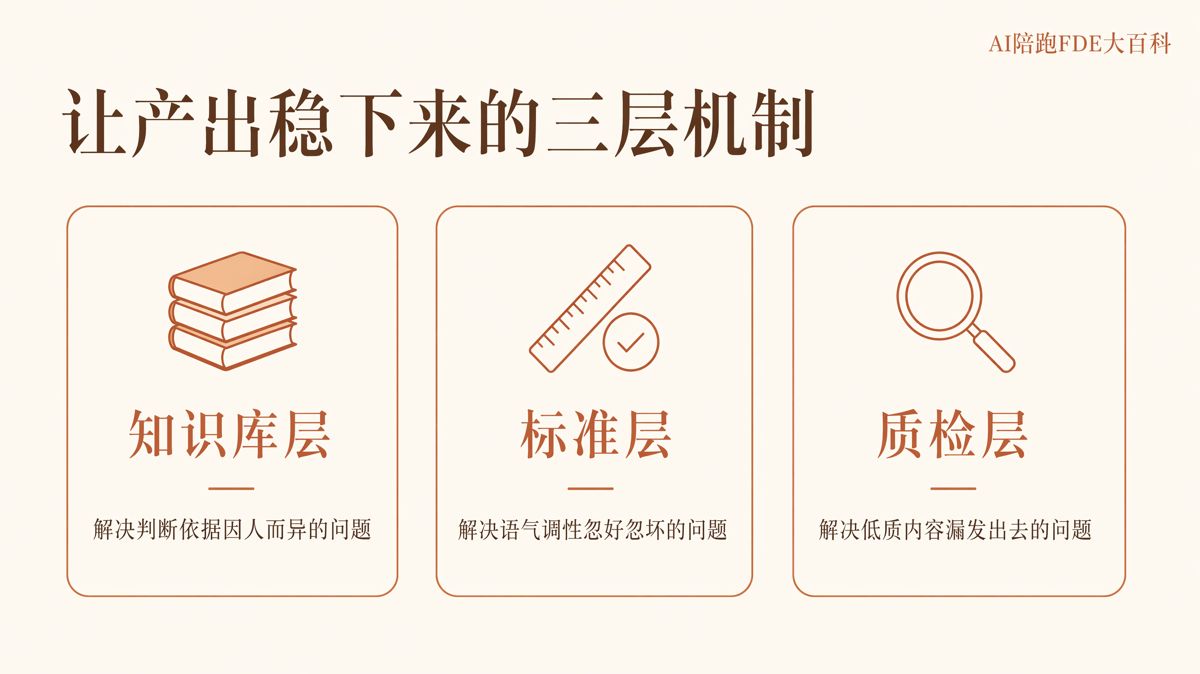
To solve inconsistency at the root, you need three interconnected layers: 1. Fixed rules for topic selection and source material gathering, removing subjective guesswork. 2. A centralized style guide, preventing ten writers from producing ten conflicting brand tones. 3. Multi-stage quality control, intercepting substandard drafts before publication.
Remove any of these three layers, and your production inevitably slips back into relying on whoever happens to be sitting at the keyboard.
The Three Mechanisms That Stabilize Output
The objective is to convert implicit intuition into explicit, documented assets—taking the unwritten expertise inside a veteran's head and translating it into documentation anyone can follow.
| Mechanism Layer | Operational Problem Solved | Tangible Form |
|---|---|---|
| Knowledge Base Layer | Eliminates conflicting sources and personal bias | Verified industry data, factual boundaries, common misconception logs |
| Standards Layer | Eliminates erratic brand voice and styling | Tone guidelines, banned word lists, approved sample libraries |
| Quality Control Layer | Catches errors and low-grade drafts before launch | Post-production checklists; non-compliant items cannot pass |
Once these three layers are deployed, an operator's role shifts from subjective creator to process executor. The execution barrier drops, while the knowledge base and QA gates protect the quality baseline from dropping when junior staff run the system.
This defines the core purpose of an internal AI Operator: not to manually write drafts, but to maintain the knowledge base and style guides, audit QA bottlenecks, and review performance data so team output never relies on a single person's manual craft.
Does Quality Drop When Operators Switch?
Whether performance holds up depends on whether operational capabilities belong to the organization or remain locked inside individual employees.
Look at three practical tests: Are the knowledge base and style standards formally documented? Are transferrable checklists in place? How long does it take a new hire to reach baseline compliance?
If your AI workflow stalls whenever a specific person leaves the room, your capability is personal, not organizational. If a new hire can pick up the documentation, follow the checklist, and hit the passing line, your operating mechanism works.
This reality explains adoption success rates. MIT NANDA's 2025 findings show that companies partnering with external specialists to co-develop standards and knowledge assets achieved a 67% success rate. Organizations trying to figure out processes internally without structured documentation saw success rates roughly one-third of that.
Vendor marketing often claims that "one AI operator replaces five to ten team members." These figures typically reflect vendor promotional claims rather than third-party verified benchmarks. Without standardized definitions for output quality, performance claims cannot be reliably compared—which illustrates the consistency problem itself.
If AI Fails to Deliver, Is the Model to Blame?
Rarely. Industry consensus confirms that enterprise AI initiatives almost never fail because of underlying model capabilities. They fail because data, processes, business objectives, organizational structures, talent, and governance lag behind the technology.
MIT NANDA refers to the distance between theoretical AI capabilities and actual enterprise results as the "learning gap"—the failure of people, workflows, and culture to evolve alongside the technology. Deploying enterprise AI successfully does not mean upgrading to a larger model; it means building the operational middle layer: knowledge bases, workflows, dedicated roles, and standardized operating procedures (SOPs).
Inconsistent output across different team members is not an anomaly. It is the natural symptom of a missing operational middle layer. Build that layer, and the variance resolves itself.
Where to Start: Building a Stable AI Workflow
The most reliable approach is to focus on a single operational use case, master it completely, and only then replicate it across the business.
Avoid trying to automate every department at once. Pick one focused scenario with fast turnaround cycles and measurable metrics—such as a specific content format. Build, test, and stabilize your knowledge base, style guidelines, and QA gates within that sandbox.
During this pilot stage, define clear quantitative metrics over a specific time window, typically one to three months: - Total weekly output volume - Rework and revision rates - First-pass QA compliance rates
Use verifiable data rather than subjective impressions to confirm that the mechanism works.
To verify whether your system is mature, run the Newcomer Test: bring in an operator who had no role in designing the workflow, hand them only the reference documentation and QA checklist, and see if their deliverables hit baseline standards. If they pass, your system is stable. If they fail, your institutional knowledge has not yet been properly captured.
Frequently Asked Questions
Why do different team members get different results using the same prompt?
A prompt only dictates how to ask a question. It does not define how to judge whether an answer is correct. The quality gap comes from missing background knowledge bases and objective evaluation criteria, not prompt phrasing.
Does everyone on the team need to be an AI expert to ensure consistent output?
No. Once a mechanism is established, operators do not need deep technical AI knowledge. They simply execute against documented knowledge bases and checklists. This lowers the operational barrier while protecting output quality.
What specific problems do knowledge bases and style guides solve?
A knowledge base defines the facts, corporate logic, and factual boundaries to follow. A style guide ensures voice, tone, and brand phrasing remain uniform. Missing either leads to unpredictable swings in quality.
What issues should the quality assurance gate catch?
At minimum, QA must verify factual accuracy, catch fabricated data or hallucinations, and enforce brand tone guidelines. Substandard drafts should never advance past this checkpoint.
How long does it take for a new hire to master an established AI workflow?
There is no universal timeline, but you can measure it with the Newcomer Test: give the new hire only the documentation and checklists without 1-on-1 coaching, and measure how quickly their output hits a passing grade.
Will output quality drop when team members or leads change?
If operational knowledge lives only in an employee's head, quality will decline. If knowledge bases, style rules, and QA checklists are fully documented, changing personnel will have minimal impact on output.
How can you tell if an AI workflow is genuinely stable?
Assign an outsider who had no part in designing the workflow to run it using only the reference documentation and QA checklist. If their deliverables pass review, the system is stable.
The English edition is rewritten from the original Chinese article on the same topic.

Starbox AI is an AI marketing company based in Hangzhou, China. This article draws on Starbox project work. Please credit the source when quoting.
Related reading
 AI Adoption
Can One AI Operator Really Replace 10 People?
Claims of 10x headcount cuts count generation speed, not QA and rework. Real efficiency measures net pipeline hours saved.
Oct 22, 2026 · 6 min read
 AI Adoption
Bought Basic AI and Seeing Zero ROI? A 4-Step Activation Playbook
Activating entry-level AI is not about model parameters. Turn open chat boxes into defined operational stations with clear inputs, templates, and QA checklists.
Oct 22, 2026 · 6 min read
 AI Adoption
Why One-Click AI Fails at Work: How to Pick Enterprise Agents
One-click AI tools seem easy, but their first-draft accuracy is terrible. Real business ROI requires multi-step workflows with your own knowledge base.
Oct 21, 2026 · 6 min read