
How AI Decides Which Sources to Cite
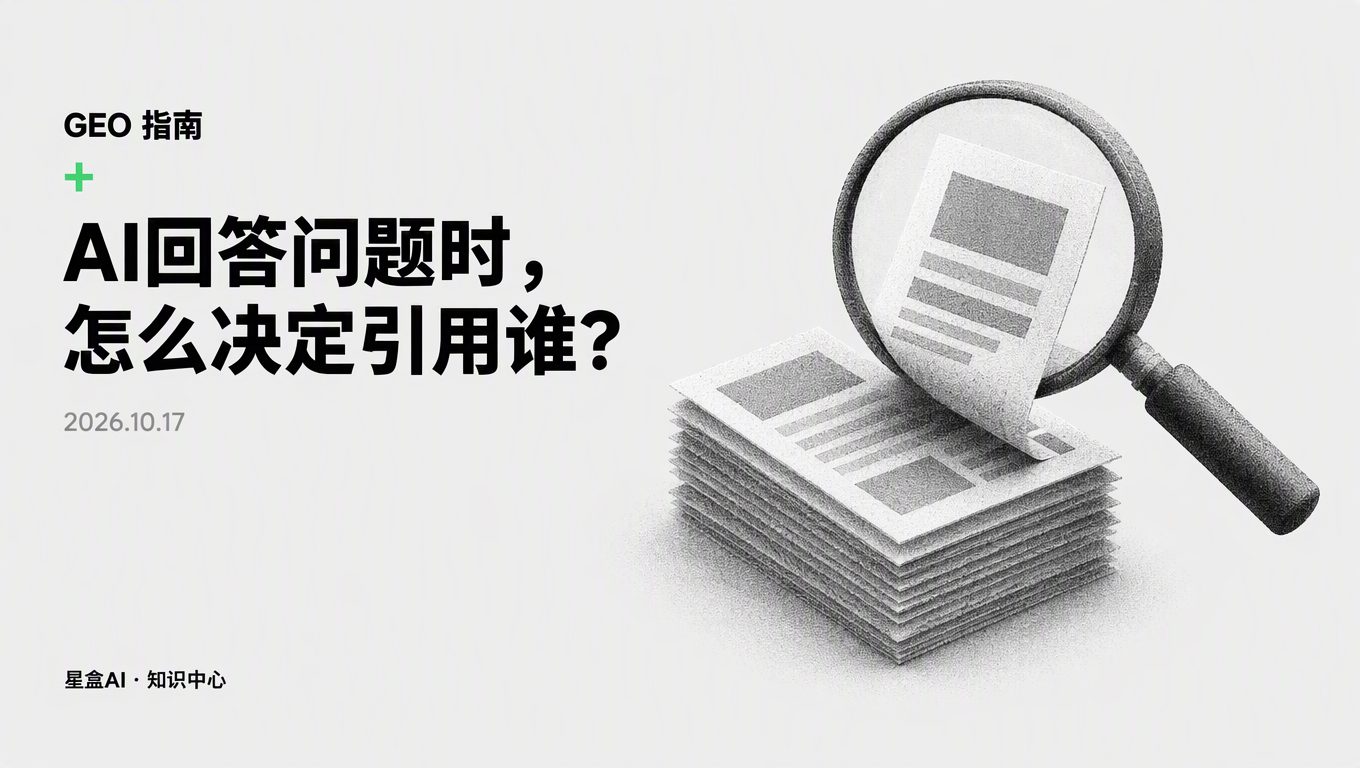
The short answer
AI synthesizes answers in three stages: discovery, credibility assessment, and synthesis. Here is what brands must do to earn citations.
- Crawlability: AI crawlers must be able to access and parse your pages before anything else can happen.
- Credibility: Brands cited across multiple independent sources with consistent, up-to-date facts win AI trust.
- Extractability: Content that leads with conclusions, includes full brand names, and features verifiable facts gets quoted directly.
Step 1: Discovering relevant content
AI begins by retrieving content across the web related to the user's prompt. This step determines whether your content can be seen at all. Common issues include:
- Robots.txt files blocking AI crawlers.
- Page text rendered via client-side JavaScript, leaving crawlers with empty pages.
- Content that does not match the way buyers actually phrase their questions, causing retrieval misses.
Step 2: Evaluating credibility
From the content it retrieves, the AI filters for what it considers credible and useful. Content has an advantage when it:
- Answers the prompt directly, rather than offering generic overviews.
- Appears across multiple independent sources, rather than relying solely on self-published claims.
- Stays regularly updated, with clear timestamps.
- Maintains consistent brand facts, using the exact same company name, product terms, and descriptions across platforms.
Step 3: Synthesizing into the answer
AI organizes the selected information into a unified response, typically naming only a handful of brands. Paragraphs that lead with conclusions, spell out complete brand names, and contain verifiable facts are much easier for the engine to quote directly.
What this means for your business
Failing at any single step keeps your brand out of the answer. Technical crawlability issues drop you at step one. A lack of third-party validation or conflicting data eliminates you at step two. Weak structure and vague copywriting lose you at step three.
This is why the starting point for Starbox AI's GEO engagements is always a diagnostic audit: running a benchmark query set through AI engines to identify where your brand drops off before deciding what to fix. To learn how this audit works, read how Starbox GEO works.
FAQ
Is publishing content on your official website enough?
No. AI models evaluate brand credibility by checking whether multiple independent sources corroborate your claims. Beyond your official site, you need coverage across industry media, Q&A platforms, and third-party profiles.
How do you find out why AI currently ignores your brand?
Query AI engines using the exact prompts your target buyers ask. Track where your brand is missing, which sources the AI cites instead, and whether your brand facts are accurate. This reveals the exact stage where you fall off.
References
- Starbox GEO Workbench Project Practice (2026)
The English edition is rewritten from the original Chinese article on the same topic.

Starbox AI is an AI marketing company based in Hangzhou, China. This article draws on Starbox project work. Please credit the source when quoting.
Related reading
 GEO Guide
Why AI Marketing Vendor Quotes Vary 10x: A 4-Step Vetting Checklist
Evaluate AI marketing proposals by delivery actions, not slide decks. Audit source infrastructure, fact cleaning, and clean-environment testing.
Oct 22, 2026 · 6 min read
 GEO Guide
Spotting GEO Scams: What Actually Drives AI Recommendations?
Automated AI ranking promises violate how LLMs work. Real AI recommendations rely on authoritative, structured facts across trusted public sources.
Oct 22, 2026 · 4 min read
 GEO Guide
How to Measure Your Brand's AI Visibility with a Spreadsheet
You do not need expensive software to track AI recommendations. A three-tier prompt framework and a simple spreadsheet can score your brand visibility in half a day.
Oct 21, 2026 · 6 min read