
Global SaaS GEO: 4 Content Assets to Build Before Scaling Blogs
The short answer
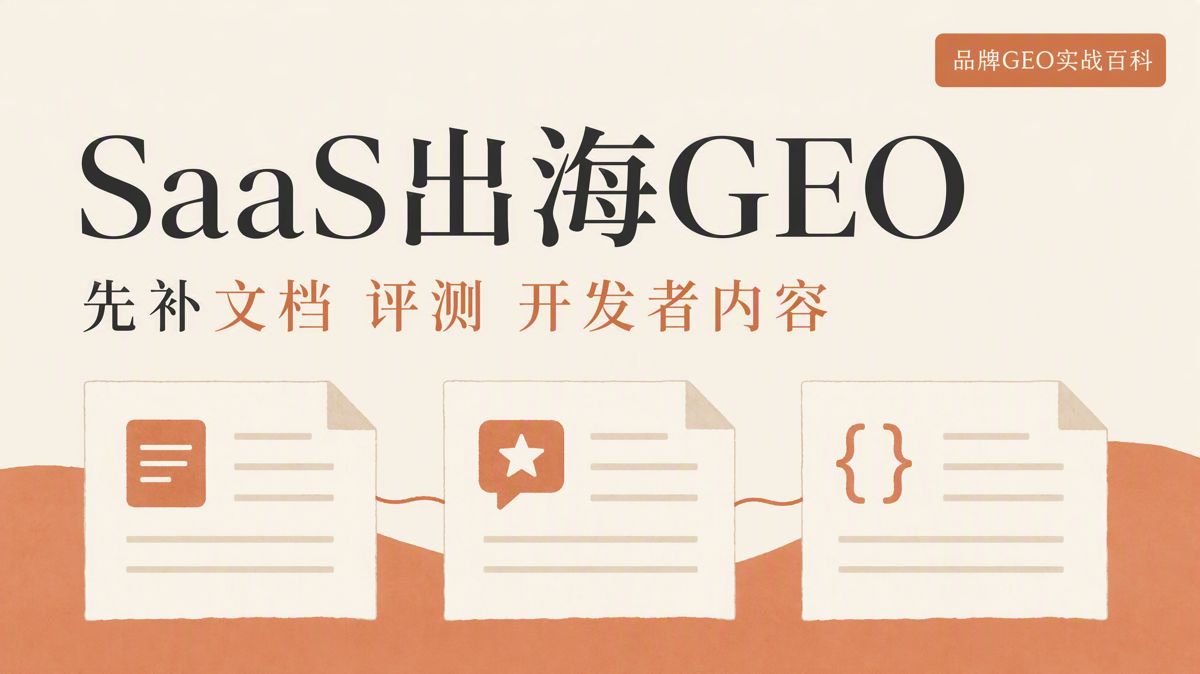
Before scaling English blogs, global SaaS teams must publish clear product facts, third-party reviews, developer assets, and technical SEO foundations.
SaaS (Software as a Service) delivers applications to end users over the cloud. Generative Engine Optimization (GEO) organizes and presents brand information so generative AI search platforms—often called answer engines—can discover, understand, and cite your product when generating answers.
Many software companies launching international expansion start their GEO efforts by commissioning dozens of English blog articles. While editorial content has its place, B2B buyers evaluating software ask specific, operational questions:
- Does this product fit our team size, industry, and use case?
- How does it differ from incumbent alternatives?
- Does it offer APIs, and can it integrate with our existing stack?
- What are the permissions, migration pathways, and pricing structures?
- What are its operational limits, and how do we resolve errors?
These questions require hard product facts. High-level commentary on industry trends neither guides a purchasing committee nor provides answer engines with verifiable citations.
Official guidelines released by a major search platform on May 15, 2026, make it clear that generative AI optimization is an extension of search experience optimization. It relies on the same core mechanics as traditional SEO: pages must be crawlable and indexable before an engine can retrieve them. Crawling means an automated bot reads the page; indexing means the system stores and categorizes that content in its searchable database.
Before ramping up content production, ask one foundational question: When a buyer prompts an AI engine with a decisive evaluation question, does your site offer a dedicated, verifiable page that provides the complete answer?
The Four Content Foundations
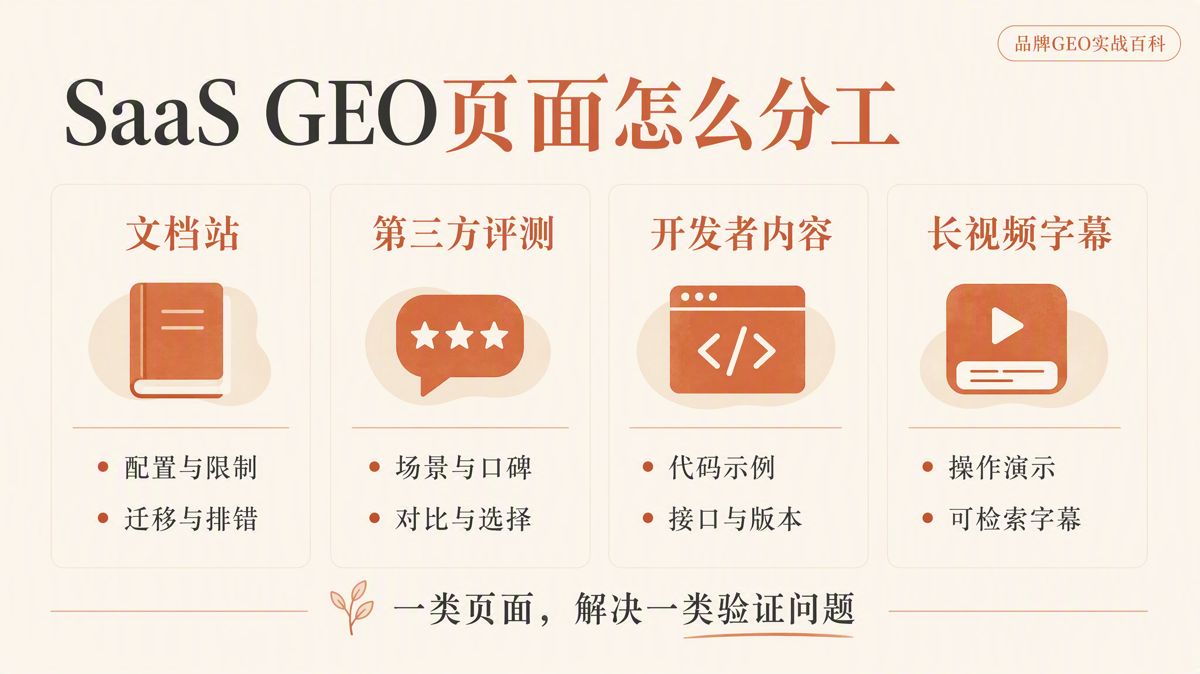
Documentation establishes technical and operational facts. Third-party reviews build shortlist credibility outside your primary domain. Developer resources enable technical buyers to validate capabilities. Technical foundations ensure answer engines can reliably locate, render, and index these assets.
| Content Type | Priority Inclusions | Primary Question Answered | What It Cannot Replace |
|---|---|---|---|
| Documentation | Product definitions, setup steps, roles, limits, error codes | How do we integrate, configure, and migrate? | Independent third-party reputation |
| Third-Party Reviews | Use cases, transparent ratings, user feedback, comparison axes | Is this solution worth shortlisting? | Official technical specifications |
| Developer Content | Code snippets, API documentation, repository guides, technical FAQs | Can our engineering team validate and build on it? | Comprehensive help centers |
| Technical Foundation | Crawlability, indexability, clean DOM structure, sitemaps, internal links | Can search bots discover and parse the content accurately? | Factual content on the page itself |
Video demonstrations and accompanying transcripts help illustrate complex configurations and operational boundaries. However, video remains a supporting format; it cannot replace indexable, crawlable text documentation that an answer engine can easily parse and quote.
1. Documentation: Answering Procurement and Integration Questions
When an enterprise buyer asks whether a platform supports their existing identity and access management (IAM) system, they do not want an essay on the future of enterprise security. They want immediate operational clarity: technical prerequisites, field mapping protocols, fallback behaviors, and documented system limits.
The more direct the answer, the easier it is for an AI engine to extract and attribute.
Structure your documentation to support this retrieval:
- Dedicate each page to a single operational topic or question.
- Formulate page titles around realistic buyer queries.
- State the direct answer or resolution within the first two or three sentences.
- Follow with technical prerequisites, implementation steps, operational limits, and links to related endpoints.
- Use structured tables to display feature matrices, permission tiers, and pricing plans rather than burying them in narrative paragraphs.
Avoid padding documentation for length. A reliable test for clear documentation is whether an excerpt retains its full, accurate meaning when extracted and read completely out of context.
For SaaS companies, these pages serve dual roles: they support active customers and provide the factual baseline prospective buyers need during technical due diligence.
2. Third-Party Reviews: Providing Objective Selection Criteria
Third-party review profiles do more than collect high star ratings; they give procurement teams verified reference points to assess real-world viability.
Buyers turn to third-party ecosystems to answer specific questions:
- Does this tool support our industry vertical and team scale?
- How resource-intensive is the deployment process?
- Is pricing transparent, or are there hidden usage tiers?
- Does customer support resolve blocking technical issues quickly?
- If we do not select this vendor, what are the standard alternatives?
Maintain consistent product facts across your public profiles, respond systematically to user feedback, and keep software categorization up to date.
Avoid two widespread mistakes:
First, never copy marketing copy verbatim into third-party profiles. Promotional text lacks the independent perspective buyers look for when comparing options.
Second, do not manufacture synthetic positive reviews. Fabricated reviews undermine brand credibility and trigger policy penalties from both review platforms and search engines.
Instead, encourage verified users to leave reviews detailing specific deployment timelines, internal adoption curves, support experiences, and operational limitations. If certain implementation data is missing, leave it as pending documentation rather than inventing hypothetical customer stories.
3. Developer Content: Enabling Technical Validation
For technical and product-led SaaS offerings, developer-focused assets often decide whether an engineer signs up for a trial or abandons the evaluation.
Technical evaluators require more than feature overviews. They evaluate API references, code samples, public repository documentation, and technical troubleshooting threads to confirm architectural compatibility.
In one documented case study, a developer tools company updated its documentation with working code samples, technical FAQs, and GitHub repository guides. Within eight weeks, the team achieved a 210% increase in referral traffic from answer engines and a 12-fold increase in qualified signups—defined as users matching their core target profile.
Developer assets build trust by showing engineers exactly how the product behaves in production.
Prioritize four types of technical content:
- Copy-pasteable integration examples for common tech stacks.
- Comprehensive error code indexes paired with debugging steps.
- Explicit API rate limits, payload constraints, and version deprecation schedules.
- Setup recipes for standard third-party developer ecosystems.
Each technical page should state prerequisites, request payloads, response schemas, and failure modes. Never present an isolated code snippet without context, and never omit architectural constraints to make a product look simpler than it is. Technical buyers measure vendor maturity by how openly operational boundaries are documented.
Non-technical SaaS products may not require API code samples, but they still need verifiable implementation assets: role-based access control (RBAC) matrices, CSV data import rules, migration workflows, supported integrations, and common operational failure modes.
The format may differ, but the goal is the same: eliminate unverified assumptions before the prospect begins a proof of concept.
Video Demonstrates, but Text Informs Answer Engines
Data from a low-code SaaS provider showed that a library of over 800 long-form videos, combined with a structured help center and active community support, contributed to 8% of all LLM-driven signups. Furthermore, these registrations converted at six times the rate of standard organic search visits.
Low-code platforms allow users to build applications via visual interfaces. LLMs (Large Language Models) power the generative engines that deliver direct answers. Conversion rate measures the share of visitors who complete a key milestone, such as account creation.
This performance was the product of a unified content mix, not video alone.
Video walks users through visual interfaces and complex configurations. Help centers provide search engines with indexable answers. Community threads resolve long-tail, edge-case questions.
Treat video as an illustrative complement. Always mirror the steps, constraints, and troubleshooting guidance shown in a video into crawlable, well-structured text pages. Otherwise, answer engines cannot easily parse or cite the underlying information.
4. Technical Foundations: Meeting the Discovery Baseline
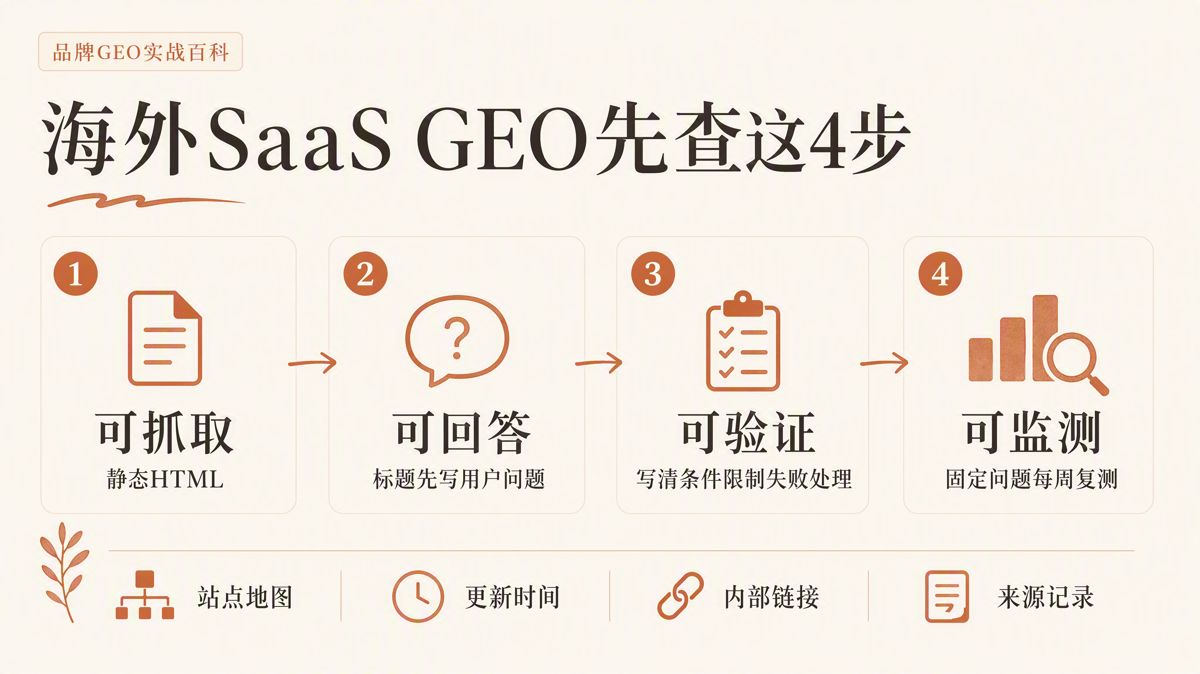
Once content is drafted, ensure answer engines can crawl, render, and index it without friction.
Audit these essential technical factors first:
- Server-side accessibility: Ensure primary content renders directly in the initial HTML response rather than relying entirely on client-side JavaScript execution.
- Sitemap submission: Submit XML sitemaps containing all core documentation, feature pages, and comparison resources to major search engines.
- Document hierarchy: Use clean heading structures (
H2,H3), clear timestamps showing when pages were last updated, and context-rich internal linking. - Indexable text: Place critical product facts, specifications, and configurations directly within the page body, not trapped inside static graphics, interactive widgets, or closed PDFs.
- Schema markup: Implement structured data to help search systems differentiate your brand and products from entities with similar names. Structured data provides clear machine-readable signals; it is not a shortcut to bypass content quality requirements.
When selling across borders, include clearly linked privacy policies, data processing agreements (DPAs), and AI content disclosures explaining whether automated systems generate or assist your content. European deployments require explicit alignment with regional data privacy and tracking regulations; target regions elsewhere require similar compliance checks.
These disclosures are more than legal requirements. Technical buyers and answer engines both analyze compliance statements to verify whether an enterprise-grade platform meets baseline security standards.
Why Multi-Engine Strategy Matters
A 2026 cross-platform citation study revealed that 86% of the top cited domains across three major answer engines do not overlap.
Content that secures citations on one platform will not automatically rank as a primary source on another. Furthermore, cross-engine SaaS benchmark data shows distinct variation in visitor conversion performance across platforms, reporting conversion rates of 16.8%, 14.2%, and 2.8% across three different answer engines.
A sound global GEO strategy maps specific content formats to specific user intents:
- Documentation handles granular product, security, and architectural questions.
- Third-party reviews address shortlist evaluation and side-by-side competitor comparisons.
- Developer content answers technical feasibility and code-level queries.
- Video and transcripts handle step-by-step visual workflow demonstrations.
You do not need to tackle every platform at once.
Instead, build a standardized set of evaluation prompts and establish a performance baseline. Monitor four metrics across target engines:
- Brand mention frequency.
- Shortlist inclusion across relevant category queries.
- Specific landing pages cited in generated responses.
- Competitor positioning and source attribution.
Identify your critical gaps first, then allocate resources to documentation, customer reviews, technical assets, or visual walkthroughs accordingly.
Without a fixed set of test prompts and an ongoing performance record, teams often mistake high-volume content publishing for genuine GEO progress.
Measuring Early GEO Progress
During the early stages of a GEO initiative, run the same set of core evaluation queries across your target answer engines every week. Record brand visibility, shortlist inclusion rates, cited domain paths, and the presence of direct competitors.
Internally, track demo and trial form attribution, direct traffic lifts, and activation rates. While traditional non-paid search rankings offer contextual value, they should not be your sole performance gauge.
GEO rarely produces an overnight flood of top-of-funnel traffic. The earliest indicators of traction are subtle: an answer engine begins mentioning your brand in response to category queries, your platform appears in AI-generated product comparisons, or your documentation URLs begin appearing as cited sources.
Validate these shifts through continuous, standardized testing rather than drawing conclusions from isolated ad-hoc searches.
Final Thoughts
Global SaaS GEO is not a volume play centered on producing hundreds of generic English blog posts. It is about organizing your product capabilities, integration boundaries, constraints, and operational details into modular, verifiable, and authoritative pages that engines can cite.
Build your product documentation, third-party footprint, developer resources, and technical foundations first. Then, use structured testing to guide your next phase of content investment.
When every asset resolves a real buyer question and every optimization is tracked against measurable benchmarks, your team can clearly identify which pages drive product recommendations—and where critical answers are still missing.
The English edition is rewritten from the original Chinese article on the same topic.

Starbox AI is an AI marketing company based in Hangzhou, China. This article draws on Starbox project work. Please credit the source when quoting.
Related reading
 GEO Guide
Why AI Marketing Vendor Quotes Vary 10x: A 4-Step Vetting Checklist
Evaluate AI marketing proposals by delivery actions, not slide decks. Audit source infrastructure, fact cleaning, and clean-environment testing.
Oct 22, 2026 · 6 min read
 GEO Guide
Spotting GEO Scams: What Actually Drives AI Recommendations?
Automated AI ranking promises violate how LLMs work. Real AI recommendations rely on authoritative, structured facts across trusted public sources.
Oct 22, 2026 · 4 min read
 GEO Guide
How to Measure Your Brand's AI Visibility with a Spreadsheet
You do not need expensive software to track AI recommendations. A three-tier prompt framework and a simple spreadsheet can score your brand visibility in half a day.
Oct 21, 2026 · 6 min read