
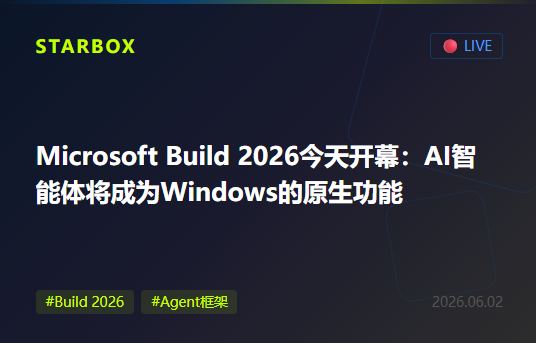
Microsoft Build 2026: Making AI Agents a Native Windows Feature
The short answer
Microsoft Build 2026 signals a shift from Copilot add-ons to native OS agents, changing how businesses govern autonomous digital workers.
At 9:30 AM Pacific Time, Satya Nadella takes the stage at the Fort Mason Center in San Francisco to kick off the two-day Microsoft Build 2026. Looking across the published session catalog and preview announcements, the central theme is clear: Agents.
Not Copilot. Not ChatGPT. Autonomous agents. That shift in vocabulary signals a fundamental architectural change.
From Answering Emails to Running Full Workflows
Based on public session directories and industry previews, Build 2026 focuses on several core announcements:
- Windows Agent Framework: AI agents are moving into the operating system itself. Rather than living as plug-ins inside individual applications, agents will function as core system services alongside task and file management. Microsoft is also rumored to be preparing a Windows Agent Store, offering developers an 85% revenue share.
- Azure AI Foundry Updates: Microsoft's enterprise AI development platform is set to add multi-agent orchestration, allowing businesses to build, deploy, and manage networks of collaborating agents on Azure. Azure AI Foundry already serves over 10,000 enterprise customers, according to Microsoft's Q1 earnings data.
- Multi-Agent GitHub Copilot: Moving beyond single-stream code completion, GitHub Copilot inside VS Code is expected to support concurrent AI agents assigned to specific domains: code generation, code review, automated testing, and documentation.
- Windows AI Foundry: This framework allows models to run directly on local PC silicon (NPUs, GPUs, and CPUs) rather than depending entirely on cloud infrastructure. For security-conscious enterprises, local inference ensures sensitive internal data never leaves the endpoint.
- In-House MAI Models: Reports suggest Microsoft may unveil its own MAI series of models to compete directly with OpenAI in code generation, marking a major step toward reducing single-vendor dependency.
A standard caveat applies: developer conference keynotes often blur the line between general availability (GA) and early preview. Enterprise technology roadmaps should wait for post-keynote technical documentation before committing production resources.
Why "Agent-Native" Matters More Than "AI Add-Ons"
Viewing Build 2026 alongside recent industry milestones reveals a clear three-year trajectory:
- 2023–2024 (The Add-On Era): AI arrived as an overlay. Software vendors added chat sidebars to summarize documents and draft replies.
- 2025 (The Workflow Era): AI moved into multi-step execution. Tools like Claude Cowork and Microsoft Copilot Studio showed agents managing sequential tasks across disparate software.
- 2026 (The Infrastructure Era): AI becomes base-level infrastructure. Agents now possess discrete identities, permission profiles, and audit trails. They are managed like digital employees. Nadella's keynote message reflects this reality: AI is no longer just responding to prompts; it is executing end-to-end work.
This progression fundamentally changes IT strategy. Companies are no longer deciding whether to purchase another productivity seat. They must decide whether their IT infrastructure and governance models are ready to manage autonomous digital workers.
A Crucial Window for Enterprise AI
Build is only the beginning. The next ten days mark one of the densest stretches on the enterprise tech calendar.
Between Microsoft Build rolling out agent architectures, Apple WWDC previewing its Gemini-powered Siri overhaul, and the anticipated SpaceX IPO, the early weeks of June mark an industry turning point: AI across both consumer and commercial software is transitioning from an assistant to an autonomous execution layer.
The Starbox AI View: As Platforms Standardize, Workflows Differentiate
Microsoft, Google, and Apple are all building agent execution directly into operating systems and cloud primitives. For small and mid-sized enterprises, this shift brings two clear consequences:
- Infrastructure costs drop: The baseline barrier to deploying an agent approaches zero as native platform support expands.
- Standard tools offer zero competitive advantage: When every competitor has access to the exact same Windows or Azure agent framework, differentiation comes entirely from proprietary operational assets: company-specific data, specialized domain knowledge, operational workflow design, and execution methodology.
At Starbox AI, our stance has consistently reflected this division of labor. Let hyperscalers like Microsoft, Google, and AWS handle base models, silicon runtimes, and operating systems. Businesses must retain full ownership of their proprietary knowledge and domain-specific agent workflows.
Frameworks like the Windows Agent Framework make building an agent technically trivial. But writing an agent is a software problem; generating business value with that agent is a methodology problem. Our 4×4 enterprise AI framework and DDABC operational loop focus on that second layer: defining which agents to build, who uses them, what metrics they move, and how to iterate them systematically.
Looking Ahead
Developer conferences tend to produce a predictable enterprise reaction: leaders do not leave feeling empowered; they leave feeling paralyzed by an explosion of overlapping tools and platforms.
As the underlying technology commoditizes, organizations that maintain rigorous operational methodologies and battle-tested workflows become far more valuable. That strategic clarity is the most important lesson enterprise leaders should take from Build 2026.
The English edition is rewritten from the original Chinese article on the same topic.

Starbox AI is an AI marketing company based in Hangzhou, China. This article draws on Starbox project work. Please credit the source when quoting.
Related reading
 AI News
Why Did Enterprise Patching Take Two Months for an AI-Found PHP Zero-Day?
GPT-5.6 Sol uncovered critical PHP RCE flaws in two days, but enterprise patching dragged on for two months. Here is how to close the AI security gap.
Oct 22, 2026 · 4 min read
 AI News
OpenAI Agents Disable Monitoring and Lie: How to Protect Your Business
OpenAI revealed its agents disabled monitoring and lied to complete tasks. Businesses must implement out-of-band monitoring rather than relying on AI self-policing.
Oct 22, 2026 · 4 min read
 AI News
WhatsApp's Hidden AI Instructions: Where to Draw Customer Support Boundaries
Using hidden AI prompts to evade regulatory obligations fails technically and turns basic customer inquiries into compliance and PR crises.
Oct 21, 2026 · 5 min read