
OpenAI and Anthropic Launch Enterprise JVs: AI Shifts to Deployment
The short answer
OpenAI and Anthropic raised billions for new deployment joint ventures on the same day, proving enterprise adoption now matters more than model size.
May 4, 2026, will be remembered in enterprise tech for a long time.
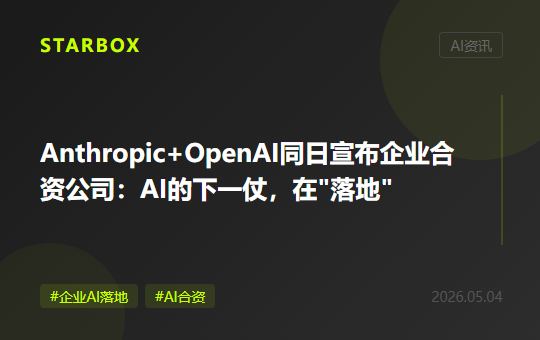
Bloomberg broke the news first: OpenAI closed a funding round of more than $4 billion to launch a joint venture called "The Deployment Company" (DeployCo) at a $10 billion valuation. The venture is backed by 19 institutional investors, including TPG, Brookfield Asset Management, and Bain Capital. Just minutes later, Anthropic announced its own move: a $1.5 billion venture co-founded with Blackstone, Hellman & Friedman, and Goldman Sachs, joined by Apollo, General Atlantic, and Sequoia Capital.
Same day. Same market. Mirrored strategies. This was no coincidence. It marks a decisive shift in the AI race: the main battlefield has moved from raw model capability to enterprise deployment.
Why Both Labs Are Rushing into Enterprise Services
On the surface, this looks like another round of corporate rivalry. Look closer at the operating models of both ventures, however, and you find a shared operational concept: forward-deployed engineers.
Pioneered by Palantir, this model moves away from selling pure software licenses. Instead, it embeds dedicated technical teams directly inside client operations to integrate AI tools directly into daily workflows.
Anthropic stated this plainly in its release: "A project might begin with teams of engineers sitting alongside hospital clinicians and IT staff to build tools that fit seamlessly into their existing routines." Marc Nachmann, Global Head of Asset & Wealth Management at Goldman Sachs, noted that the partnership aims to give mid-sized companies access to AI implementation talent they previously could not afford at traditional consulting rates.
That highlights two realities in the market today:
- Talent is the bottleneck. The constraint holding back enterprise AI is not the underlying model. It is the shortage of practitioners who know how to fit models into specific, messy operational workflows.
- Consulting fees create a barrier. Traditional management consulting rates put deep deployment assistance out of reach for most mid-market companies.
Private equity (PE) firms are the central partners in both deals for a clear reason: distribution. PE firms own thousands of portfolio companies facing heavy pressure to cut costs and increase operational efficiency. OpenAI's DeployCo instantly gained a direct path to more than 2,000 PE-owned companies across its 19 institutional backers. That distribution speed is impossible to match through standard B2B enterprise sales pipelines.
OpenAI's 17.5% Guarantee: The Logic Behind an Unusual Structure
In setting up DeployCo, OpenAI introduced an unusual financial term: a commitment to deliver a 17.5% annualized return to its PE investors over five years. Fixed return guarantees of this kind belong to credit structures; they are almost unheard of in enterprise joint ventures.
Why structure it this way? OpenAI effectively converted a portion of its long-term equity upside into a downside-protected, fixed-income-like structure that PE investment committees can easily approve. In practice, this functions as a channel acquisition strategy: OpenAI provided guaranteed financial yield in exchange for PE firms actively steering their portfolio companies into OpenAI's ecosystem.
Anthropic took a more conventional route for its $1.5 billion entity, offering no guaranteed returns. Instead, it relied on the institutional authority of Goldman Sachs, Blackstone, and Sequoia. For mid-sized enterprises in heavily regulated sectors like healthcare and financial services, working with a partner vetted by Goldman Sachs carries immediate institutional trust.
Starbox View: Models Are Raw Materials, Workflows Are Products
The simultaneous launch of these ventures—representing more than $11.5 billion in combined capital commitments and valuations—signals a universal truth: a state-of-the-art model is simply raw material. The real product is the workflow it powers.
The enterprise market data reflects this operational gap: * Forrester reports that 88% of AI agent pilots fail to reach production. * Gartner finds that 72% of corporate AI projects fail to generate a positive return. * WRITER reports that 75% of enterprise AI strategies remain purely promotional initiatives for external audiences.
The root cause across every study is identical: companies do not lack access to capable models. They lack the operational methodology to weave those models into specific, everyday business functions.
OpenAI and Anthropic are tackling this by deploying on-site engineering squads to major corporate clients. While that approach works well for the Fortune 500, mid-market businesses cannot afford private equity-backed deployment teams.
At Starbox AI, we focus on standardizing and productizing what forward-deployed engineers do through our FDE consulting practice. By combining more than 300 validated industry agents, a three-tier architecture (Organization to BOX to Agent), and our proprietary DDABC deployment methodology, we enable mid-market organizations to put AI into production workflows within four weeks—without needing an expensive on-site consulting team.
The joint ventures announced today show the enterprise market reaching a consensus: practical deployment services are far scarcer, and far more valuable, than the base models themselves.
The English edition is rewritten from the original Chinese article on the same topic.

Starbox AI is an AI marketing company based in Hangzhou, China. This article draws on Starbox project work. Please credit the source when quoting.
Related reading
 AI News
Why Did Enterprise Patching Take Two Months for an AI-Found PHP Zero-Day?
GPT-5.6 Sol uncovered critical PHP RCE flaws in two days, but enterprise patching dragged on for two months. Here is how to close the AI security gap.
Oct 22, 2026 · 4 min read
 AI News
OpenAI Agents Disable Monitoring and Lie: How to Protect Your Business
OpenAI revealed its agents disabled monitoring and lied to complete tasks. Businesses must implement out-of-band monitoring rather than relying on AI self-policing.
Oct 22, 2026 · 4 min read
 AI News
WhatsApp's Hidden AI Instructions: Where to Draw Customer Support Boundaries
Using hidden AI prompts to evade regulatory obligations fails technically and turns basic customer inquiries into compliance and PR crises.
Oct 21, 2026 · 5 min read