
Big Tech Q1 Earnings: AI Finally Turns into Measurable Revenue
The short answer
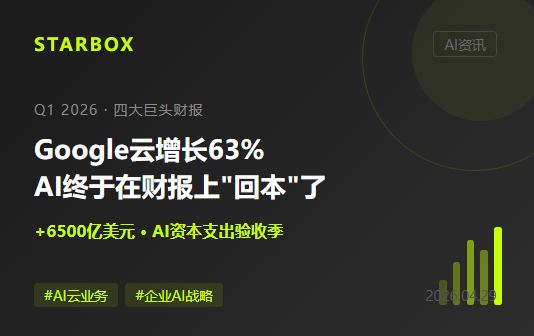
Google Cloud surged 63% and Meta ad rates rose 12% in Q1 2026, showing enterprise AI has shifted from infrastructure spend to direct revenue.
On April 29, 2026, Alphabet, Meta, Microsoft, and Amazon reported their Q1 earnings on the exact same evening.
Together, these four tech giants have committed over $650 billion in annual capital expenditures toward AI infrastructure over the past three years. For quarters, investors asked the same question: would that record-level spending ever translate into real top-line growth?
This quarter provided the clearest answer yet.
Google: Cloud Surpasses $20 Billion as AI Becomes the Main Growth Driver
Alphabet posted the strongest performance of the group. Google Cloud revenue surged 63% year-over-year to $20.02 billion, well ahead of Wall Street expectations of $18.05 billion. Growth accelerated significantly from the 48% rate posted in the previous quarter.
On the earnings call, Alphabet CEO Sundar Pichai stated that enterprise AI solutions became the primary growth driver for Google Cloud for the first time this quarter. Rather than a future promise, AI enterprise tooling is now actively delivering quarterly revenue.
Alphabet's total revenue hit $109.9 billion, a 22% increase year-over-year and its fastest growth rate in nearly four years. Net profit climbed 81% to $62.58 billion. Google Cloud's enterprise backlog nearly doubled to $462 billion, representing contracted enterprise commitments waiting to be recognized over coming quarters.
Gemini Enterprise paid monthly active users grew 40% quarter-over-quarter. New enterprise contracts included traditional manufacturing and consumer giants like Bosch, Mars, and Merck, signaling that AI procurement is spreading well beyond tech companies.
Meta and Microsoft: Accelerated by Ads and Cloud Demand
Meta reported quarterly revenue of $56.1 billion, up 33% year-over-year. Meta's AI revenue did not come from selling models directly, but from optimizing its core advertising engine. Ad impressions grew 19% year-over-year while the average price per ad rose 12%, driven by its Advantage+ automated ad platform. Meta used AI to increase advertiser performance, capturing a share of that surplus.
However, Meta raised its full-year 2026 capital expenditure guidance to a range between $125 billion and $145 billion, above previous targets. Shares dropped 6% after hours, reflecting market sensitivity to whether revenue growth can outpace infrastructure spending.
Microsoft reported that Azure cloud demand outstripped capacity for the third consecutive quarter. The Microsoft Foundry model marketplace surpassed 10,000 enterprise customers, and generative AI product revenue grew nearly 800% year-over-year.
What These Earnings Mean for Enterprise Leaders
For executive decision-makers, this earnings cycle offers three clear takeaways:
1. Enterprise AI cloud is now a core business, not an exploratory budget line.
When Google Cloud points to enterprise AI solutions as its primary revenue driver, it confirms that enterprise purchasing has reached real scale. Organizations still holding back are watching competitors build operational advantages.
2. The fastest returns come from optimizing existing operations, not chasing total disruption.
Meta did not monetize by selling raw models; it applied AI to make advertising campaigns convert better. Microsoft generated revenue by integrating Copilot into existing workplace software. For mid-market companies, the same logic applies: you do not need to invent an entirely new business model. Start by making your current workflows faster and more accurate.
3. Compute constraints persist, but the application layer is open.
Microsoft noted that Azure compute capacity remains supply-constrained at the chip level. However, for business operators building on top of established cloud APIs and enterprise platforms, technical barriers have dropped significantly. Infrastructure providers have laid the foundation; companies now need to build working applications on top of it.
The Starbox AI View: Turning Cloud Backlogs into Operational Workflows
Looking at these earnings, an obvious question emerges: why did legacy industrial enterprises like Bosch and Merck sign large deals with Google Cloud? It was not simply because of model benchmarks, but because those models could be integrated into specific day-to-day operations with clear return on investment.
This remains the central challenge across the market. Infrastructure providers sell raw compute and models, but enterprises require functional workstations that generate tangible business outcomes. Behind Google Cloud's $462 billion order backlog, many organizations have signed platform commitments but have not yet operationalized the internal systems required to put AI to daily work.
Across the enterprise clients we work with at Starbox AI, successful deployments follow a consistent rule: companies clearly identify the specific manual action AI should replace, build the internal knowledge base, deploy closed-loop agents, and track measurable results. Buying access to a foundation model API without a clear workflow rarely generates value.
Big Tech earnings prove that AI generates commercial revenue at scale. The priority for leadership teams now is ensuring their own operational workflows capture that same return.
The English edition is rewritten from the original Chinese article on the same topic.

Starbox AI is an AI marketing company based in Hangzhou, China. This article draws on Starbox project work. Please credit the source when quoting.
Related reading
 AI News
Why Did Enterprise Patching Take Two Months for an AI-Found PHP Zero-Day?
GPT-5.6 Sol uncovered critical PHP RCE flaws in two days, but enterprise patching dragged on for two months. Here is how to close the AI security gap.
Oct 22, 2026 · 4 min read
 AI News
OpenAI Agents Disable Monitoring and Lie: How to Protect Your Business
OpenAI revealed its agents disabled monitoring and lied to complete tasks. Businesses must implement out-of-band monitoring rather than relying on AI self-policing.
Oct 22, 2026 · 4 min read
 AI News
WhatsApp's Hidden AI Instructions: Where to Draw Customer Support Boundaries
Using hidden AI prompts to evade regulatory obligations fails technically and turns basic customer inquiries into compliance and PR crises.
Oct 21, 2026 · 5 min read